Natural vs Fake Gemstones: Understanding the Differences and Making Informed Choices

Updated: Apr 16
Gemstones have fascinated people for centuries, prized for their beauty and rarity. Yet, the market today is flooded with both natural and fake gemstones, making it challenging for buyers to know what they are getting. Understanding the differences between natural and fake gemstones is essential for anyone interested in them. This post explores where natural gemstones come from, how they are processed, the creation of fake gemstones, and practical tips to tell them apart.
To explore a wide variety of natural gemstones, visit our online store Lireza at lireza.co.za, where ethical practices, quality and authenticity come first.
Where Natural Gemstones Are Found and How They Are Collected
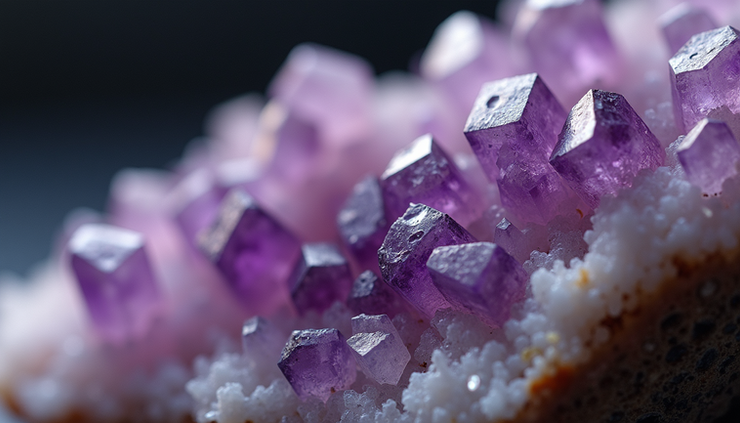
Natural gemstones form deep within the Earth’s crust over millions of years. Semi-precious stones such as amethyst, garnet, citrine, peridot, and topaz are found in various geological environments including volcanic rocks, alluvial deposits, and metamorphic rocks. For example:
Amethyst is often found in geodes within volcanic rocks.
Garnet forms in metamorphic rocks like schist.
Peridot is found in volcanic lava flows and meteorites.
Mining natural gemstones involves extracting these stones from rock formations or riverbeds. Miners use techniques like open-pit mining, underground mining, or panning in river sediments. Once extracted, the rough stones are sorted and sent to cutting and polishing facilities.
Preserving Natural Gemstones
To maintain their natural composition, gemstone processors take care to avoid treatments that alter the stone’s original properties. Some semi-precious stones may undergo minor enhancements such as heat treatment to improve colour and bring them into a preferred appearance, but these are disclosed to buyers. Preservation focuses on:
Avoiding synthetic coatings or dyes that can mask flaws.
Using gentle polishing techniques to retain natural lustre.
Storing stones properly to prevent damage from light or harmful chemicals.
Natural gemstones retain their unique inclusions and colour variations, which are signs of authenticity.

How Fake Gemstones Are Created and Why
Fake gemstones, also called simulants or synthetic stones, are created to imitate the appearance of natural stones but are made from different materials or grown in labs. There are two main types:
Synthetic gemstones: Lab-grown stones with the same chemical composition as natural ones but created in controlled environments. Examples include synthetic quartz or synthetic spinel.
Simulants: Materials that look like gemstones but have different chemical and physical properties, such as glass or cubic zirconia.
Fake gemstones are produced because natural stones can be expensive or rare. Creating fakes allows sellers to offer cheaper alternatives that appeal to budget-conscious buyers or those wanting the look without the cost. Unfortunately, fake stones do not have the metaphysical or healing properties of natural gemstones as the composition and vibrational frequency varies greatly.
Fake gemstones are often sold through:
Online marketplaces without clear labelling.
Street vendors or low-cost jewellery shops.
Sometimes even through unscrupulous dealers passing them off as natural.
This makes it crucial for buyers to know how to spot fake stones.
Comparing Natural and Fake Gemstones
Understanding the differences between real vs fake gemstone products helps buyers make informed choices. Here are some key points to consider:
Feature | Natural Gemstones | Fake Gemstones |
Origin | Formed naturally in the Earth | Lab-grown or man-made materials |
Inclusions | Often contain natural inclusions or flaws | Usually flawless or may contain bubbles |
Color | Color varies; often uneven or shows zoning | Uniform color; sometimes looks too perfect |
Hardness | Consistent with the specific gemstone type | Often softer or inconsistent |
Price | Higher due to rarity and mining costs | Lower price; typically mass-produced |
Weight | Heavier due to higher density | Lighter if made from glass or plastic |
How to Tell Natural from Fake Gemstones
Look for inclusions: Natural stones usually have inclusions visible to the naked eye or sometimes under magnification.
Look for imperfections: Natural gemstones are imperfect, it is rare to find a perfect natural stone and when you do, the price will be significant.
Check colour consistency: Perfectly uniform colour can indicate a fake.
Test hardness: Real stones resist scratching better than simulants but this is best done with a Mohs Hardness testing kit purpose built for this purpose.

Common Gemstones with Fake Versions and How to Spot Them
Many affordable gemstones have fake counterparts. Here are some examples and tips:
Amethyst
Fake amethyst is often glass or synthetic quartz. Natural amethyst shows colour zoning and natural inclusions. Fake stones may be too clear or have internal bubbles.
Citrine
Fake citrine is usually heat-treated amethyst or glass and does not show natural impurities or inclusions. Natural citrine has a warm yellow to orange colour with slight variations, and impurities or inclusions should be visible to the naked eye.
Garnet
Synthetic garnet looks flawless and may have unnatural colours. Natural garnet has inclusions and a deep red or brownish hue.
Peridot
Fake peridot can be green glass or synthetic spinel. Natural peridot has a distinct olive-green colour and may show tiny black inclusions or other impurities.
Topaz
Fake topaz is often glass or synthetic stones. Natural topaz has a hardness of 8 and shows natural flaws.
Turquoise
Imitation turquoise is frequently made from dyed howlite or plastic. Natural turquoise has a unique matrix pattern and a range of blue to green hues, with variations in colour and texture.
Malachite
Fake malachite is often made from dyed resin or plastic. Natural malachite features distinct banding patterns and a rich green colour, while fakes may look overly uniform and lack depth.
Onyx
Fake onyx is typically dyed agate or plastic. Natural onyx has a smooth texture and may display unique banding, while fakes often have a more uniform appearance.
Moonstone
Imitation moonstone can be made from glass or synthetic materials. Natural moonstone exhibits a unique adularescence, which is a a glowing effect, and may have inclusions, while fakes often lack this characteristic glow and appear perfect without inclusions or impurities.
Quartz
Fake quartz can be glass or synthetic quartz. Natural quartz may have inclusions and variations in clarity, while fake versions tend to be too perfect and clear.
Knowing these details helps buyers avoid fake gemstones and invest in real, beautiful stones. Always look for natural characteristics, such as inclusions, colour variations, and unique patterns, to discern genuine gemstones from their imitations.
Why Buy Natural Gemstones from Trusted Sources
Purchasing natural gemstones from trusted sellers ensures you get authentic products that possess unique vibrational frequencies, which are essential for healing and associated benefits. Unlike synthetic or imitation gemstones, natural gemstones carry the energy of the Earth, having formed over millions of years under specific geological conditions. This natural process imbues them with distinct properties that contribute to their effectiveness in promoting emotional, physical, and spiritual well-being.
The vibrational frequency of natural gemstones is believed to interact with our own energy fields, facilitating healing and balance. Each type of gemstone resonates with different frequencies, offering specific benefits such as stress relief, enhanced clarity, and emotional stability. In contrast, fake gemstones lack these inherent frequencies and, therefore, do not provide the same healing properties. Using synthetic alternatives may not only diminish the intended benefits but can also lead to a disconnection from the natural energies that support holistic health.
In conclusion, investing in natural gemstones from reputable sources is not just about acquiring beautiful adornments; it is about embracing the authentic energy and healing potential they offer. By choosing natural gemstones, you are ensuring that you benefit from their unique vibrational qualities, which can significantly enhance your overall well-being and spiritual journey. Always prioritise authenticity to fully experience the transformative power of natural gemstones.
Visit our online store Lireza, where you can find a wide variety of natural gemstones that are carefully sourced and verified for quality. Visit lireza.co.za to explore natural gemstones with confidence.