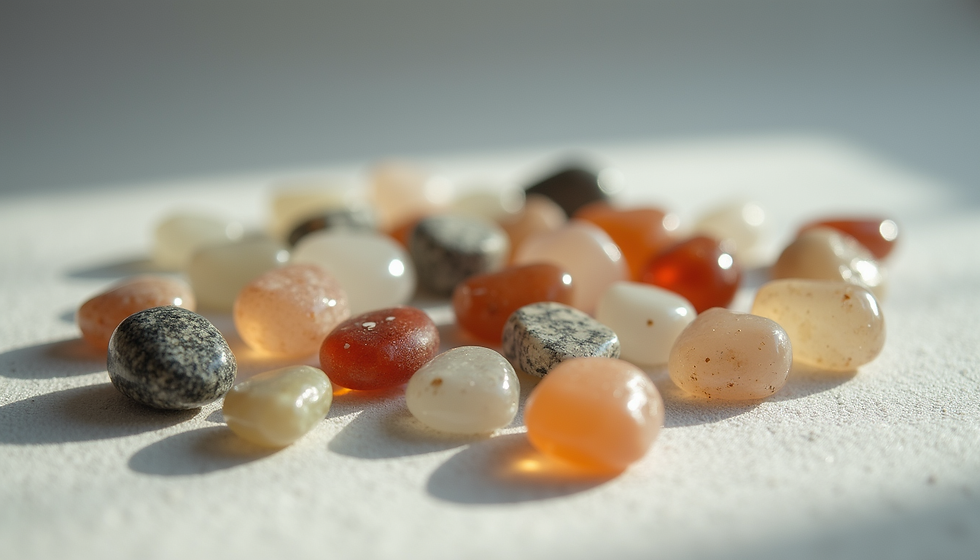
Gemstones in Nature: Colouration

Gemstones captivate us with their dazzling colours and unique patterns. But what exactly causes these colours? Why do some stones display a range of hues, while others shine with a single, pure colour? Understanding gemstone colouration reveals the fascinating natural processes behind these beautiful crystals. This post explores the science of gemstone colouration, focusing on affordable, semi-precious gemstones that are readily available. Whether you are a collector, healer, or simply curious, this guide offers detailed insights into what makes gemstones so visually striking.
If you want to explore a wide variety of gemstones showcasing stunning colouration, visit Lireza at lireza.co.za. Our collection offers many options perfect for anyone interested in natural gemstone beauty.

What Causes Colour in Gemstones?
The colour of a gemstone comes from how it interacts with light. When light hits a gemstone, some wavelengths are absorbed while others are reflected or transmitted. The wavelengths that reach our eyes determine the colour we see. Several factors influence this interaction:
Chemical impurities: Trace elements within the gemstone's structure absorb specific light wavelengths.
Gemstone structure defects: Tiny irregularities can affect how light passes through.
Physical phenomena: Effects like adularescence or labradorescence change how colour appears under different lighting or angles.
For example, pure quartz is colourless, but when small amounts of iron or titanium enter its structure, it can turn purple (amethyst) or yellow (citrine). These impurities alter the gemstone colouration by absorbing certain light frequencies.
Why Do Different Gemstones Show Different Colours?
Each gemstone type has a unique chemical composition and crystal lattice. This structure determines which impurities can enter and how they affect light absorption. Some common gemstones and their typical colour causes include:
Amethyst (purple quartz): Iron impurities and natural radiation cause its violet colour.
Citrine (yellow quartz): Iron in a different oxidation state produces yellow to orange hues.
Aventurine (green quartz): Tiny inclusions of fuchsite (a chromium-rich mica) give it a shimmering green colour.
Peridot (olivine group): Iron content causes its olive-green colour.
Topaz (various colours): Trace elements like chromium or iron create blue, yellow, or pink shades.
The same base mineral can show different colours depending on the type and amount of impurities, as well as environmental factors during formation.
Colour Variations Within Gemstones
Many gemstones display colour variations within a single stone or across stones of the same type. These variations arise from:
Zoning: Different parts of a crystal grow under varying conditions, causing colour bands or patches.
Pleochroism: Some crystals show different colours when viewed from different angles due to light absorption varying with the gemstone's orientation.
Inclusions: Tiny mineral or fluid inclusions can scatter light and create colour effects like shimmer or iridescence.
For example, amethyst often shows colour zoning with deeper purple at the crystal tips. Tourmaline is famous for its pleochroism, showing green, pink, or blue hues depending on the angle.

How the Same Gemstone Can Have Multiple Colours
Some gemstones naturally occur in multiple colours or even show several colours in one specimen. This happens because:
Mixed impurities: Different trace elements can coexist, each affecting colour differently.
Radiation exposure: Natural radiation can alter the oxidation state of impurities, changing colour over time.
Heat treatment: While natural stones are the focus here, some stones change colour when heated underground.
A great example is quartz, which includes amethyst (purple), citrine (yellow), and smoky quartz (brown to grey). These colours come from variations in iron content and natural radiation exposure. Another example is tourmaline, which can show green, pink, blue, and even bi-colour or tri-colour zones within one crystal.
Gemstones with a Wide Range of Colouration
Here are several affordable and easily accessible gemstones that exhibit varying colours across the colour spectrum:
Tourmaline: Known for its extensive colour range, tourmaline can appear in shades such as green, pink, blue, yellow, and even bi-colour or tri-colour combinations, showcasing a stunning array of possibilities.
Rose Quartz: This gentle pink stone ranges from pale to deep pink, with some specimens even appearing cloudy to white due to the minimal inclusions within the gemstone.
Citrine: Citrine is a vibrant yellow to orange gemstone that adds a warm glow to any collection.
Aventurine: Often found in shades of green, aventurine can also appear in blue, orange, and brown, making it versatile for various applications.
Jasper: Jasper comes in a multitude of colours and patterns, including red, yellow, brown, and green, making each piece unique.
Agate: Agate is a type of chalcedony that can display a stunning array of colours, including vibrant reds, deep blues, soft greens, and earthy browns. Its unique patterns, such as banding and swirling designs, further enhance its appeal.
Fluorite: This mineral is known for its vibrant colours, which can include purple, green, blue, yellow, and clear, often exhibiting banding or zoning that adds to its visual appeal.
Ocean Jasper: Ocean jasper is characterised by its unique patterns and colours, including greens, pinks, and creams, often resembling ocean waves.
Jade: Jade can appear in multiple shades, including green, white, lavender, yellow, and even black, with variations in colour often related to the specific type of jade (jadeite or nephrite).
Practical Tips for Appreciating Gemstone Colouration
Lighting matters: Viewing gemstones under natural daylight reveals true colour better than artificial light.
Cut and polish affect colour: Well-cut stones reflect light to enhance colour saturation and brilliance.
Colour intensity varies: Some stones have pale hues, while others are deeply saturated. Both can be beautiful but suit different tastes.
Look for natural variations: Colour zoning and inclusions add character and uniqueness to each gemstone.
If you want to see a wide range of semi-precious gemstones with beautiful natural colouration, visit Lireza at lireza.co.za. Our selection includes many unique and beautifully coloured gemstones perfect for your collection.